
Generated Title: Buckle Up, Buttercups: PMI Numbers Hint at a Wild Ride for November 2025!
Alright, folks, gather 'round the digital water cooler because things are about to get interesting. November 21, 2025, is shaping up to be a day. A day packed with more economic indicators than you can shake a stick at—and these aren't just any numbers; they're the kind that could send markets soaring or sinking faster than you can say "quantitative easing."
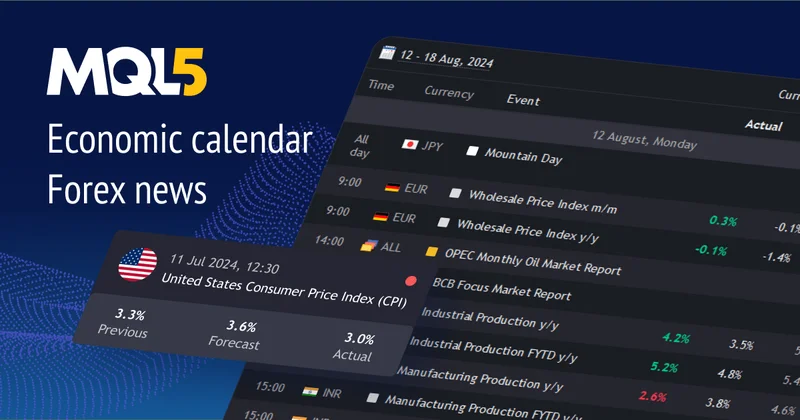
The headliners? Manufacturing and Services PMI (Purchasing Managers' Index). Think of PMI as the economy's vital signs. A healthy reading above 50? That's like a strong heartbeat, signaling expansion. Below 50? Time to call the economic doctor. The forecasts are showing a slight dip from the previous month, with Manufacturing expected to clock in at 52.0 (down from 52.5) and Services at 54.6 (just a hair below 54.8). Now, a tiny shift might seem insignificant, but in the hyper-sensitive world of finance, these whispers can turn into roars. Manufacturing PMI and services PMI highlight Friday’s economic calendar
Why all the fuss about a few decimal points? Because these numbers are like the first domino in a long chain. They influence everything from interest rates to corporate investment decisions. If the PMI data paints a picture of slowing growth, expect investors to get skittish. Conversely, a surprise jump could fuel a rally. It's a high-stakes game of economic poker, and everyone's watching each other's hands. What I'm personally curious about is how these PMI numbers will be impacted by automation. Are we seeing a slow down because humans are being replaced by machines? Or are machines helping humans in these sectors produce more?
The Orchestra of Indicators
But wait, there's more! Friday is not just about PMI. We've got a whole symphony of economic data hitting the airwaves: FOMC (Federal Open Market Committee) members yapping, Federal Budget Balance updates, Industrial Production figures, Consumer Sentiment surveys, Housing Starts reports… the list goes on! Each of these indicators adds another layer to the economic narrative, like instruments in an orchestra.
Take the Michigan Consumer Sentiment Index, for example. It's predicted to drop from 53.6 to 50.3. That's a pretty significant dip, and it suggests that consumers are feeling less optimistic about the future. And if consumers aren't spending, well, that's not exactly a recipe for economic boom times, is it? And what's causing that drop in consumer sentiment? Is it high prices? Job insecurity? Or just general anxiety about the state of the world?
And then there's the Federal Reserve. We'll be hearing from New York Fed President Williams and Fed Vice Chair for Supervision Barr. Their words are parsed and scrutinized like ancient prophecies, everyone hanging on every syllable for clues about the future of monetary policy. It's like trying to decipher the Rosetta Stone of economics, everyone is trying to figure out what they are saying.
The Atlanta Fed's GDPNow forecast, holding steady at 4.2%, is one bright spot. But can it hold up against the headwinds of potentially weakening PMI data and consumer sentiment? That's the million-dollar question, isn't it? When I first read the reports, I honestly just sat back in my chair, speechless.
Now, I know what you’re thinking: "Aris, this all sounds incredibly complex and potentially terrifying." And you're not wrong! But here's the thing: volatility creates opportunity. Smart investors thrive in uncertainty. They see the dips as chances to buy low and the surges as opportunities to sell high. It’s the same as sailing, you don't want a calm ocean, because then you aren't going anywhere.
Get Ready for Anything!
So, what's the takeaway? Buckle up, buttercups! November 21, 2025, promises to be a wild ride. The economic data coming out that day will set the tone for the markets in the weeks and months ahead. Whether it's a smooth cruise or a rollercoaster, depends on how all these numbers play out.
And speaking of rides, let's not forget the ethical dimension of all this. With AI increasingly involved in generating and analyzing economic data, we need to be vigilant about bias and transparency. Are these algorithms truly objective? Are they serving the interests of everyone, or just a select few? These are questions we need to be asking as we navigate this brave new world of data-driven finance.